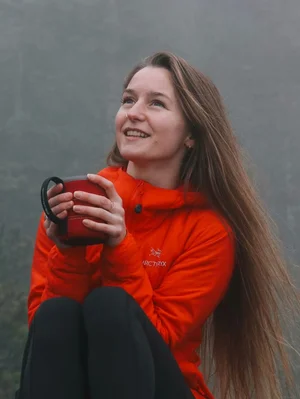
Hiking Mount Harvey
Mount Harvey is a beautiful route in Lions Bay that provides hikers with an incredible 360º view from the summit. This roughly 12km round-trip hike gains about 1,400m of elevation, so it’s definitely not one to underestimate. It’s a steady grind from the start, and only gets steeper the higher you go, but the payoff at the top – the views of Howe Sound, nearby peaks, and coastal scenery – makes the effort worthwhile. This hike can be done in any season depending on your comfort level and knowledge, whether you prefer the summer heat and dry trail, or the quieter, unique views that come with winter.
Personally, we prefer hiking Mount Harvey in the winter months. The trail tends to be less crowded to the busy summer season, and there’s something special about seeing mountains covered in snow. With that said, winter hiking does add a bit of extra planning and responsibility. There’s less daylight, so budgeting your time is important. Starting early is key, not only so you can return with some daylight left, but also so you don’t feel rushed near the summit. Always carry a charged headlamp is always a must on any trail, but especially in the winter. Sometimes even the best planned trip doesn’t turn out the way you expected.
Pacing yourself on this trail can make a big difference. It’s tempting to push hard at the start, but maintaining a steady pace will keep you from overheating and sweating too much. One of the problems with becoming too sweaty is that all that moisture on your skin can make you very cold once you stop moving, especially when the air is already cold. Taking short breaks, eating small snacks consistently, and drinking water regularly will help get you to the top and allow you to enjoy the views you worked so hard for.
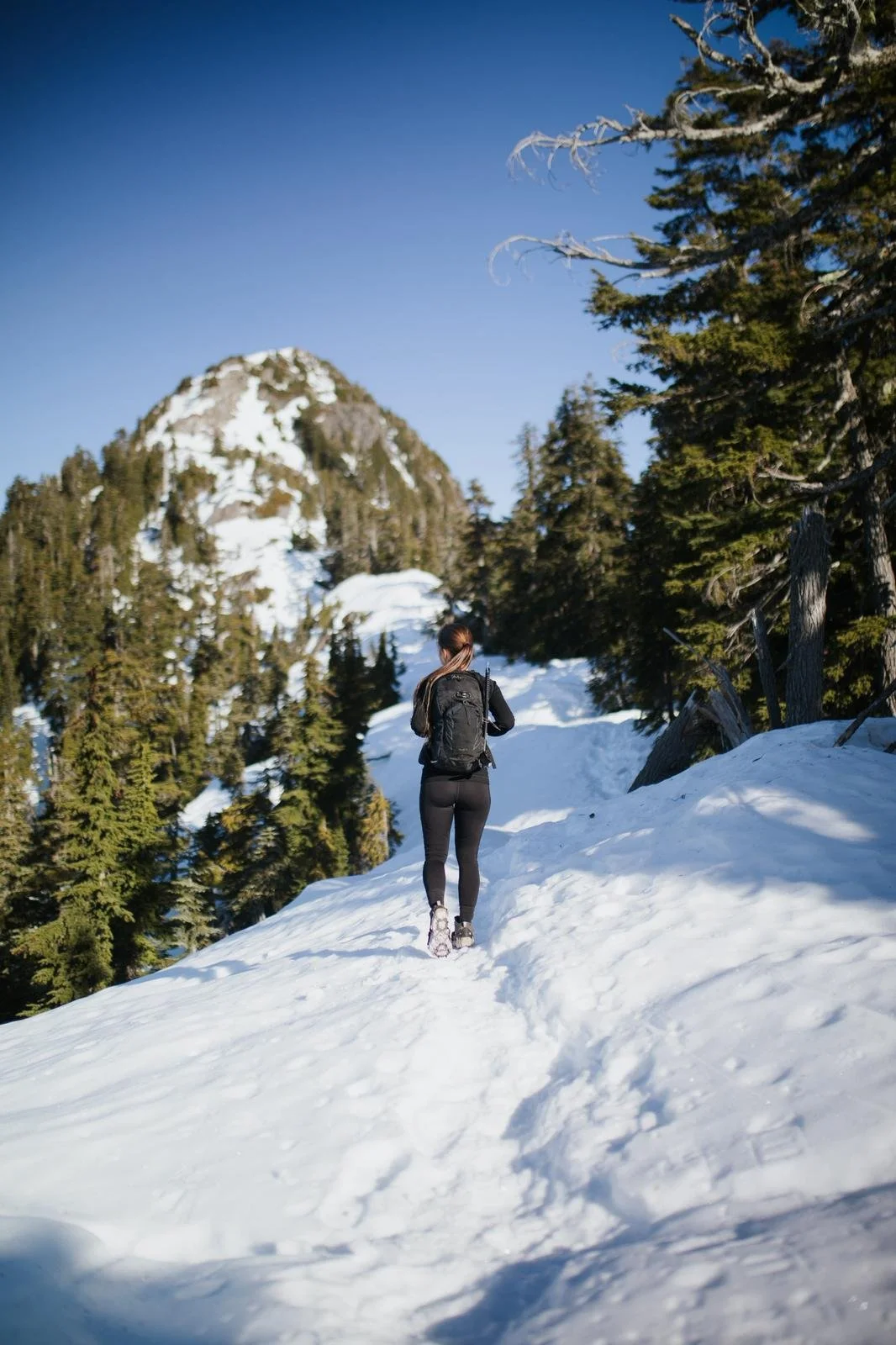
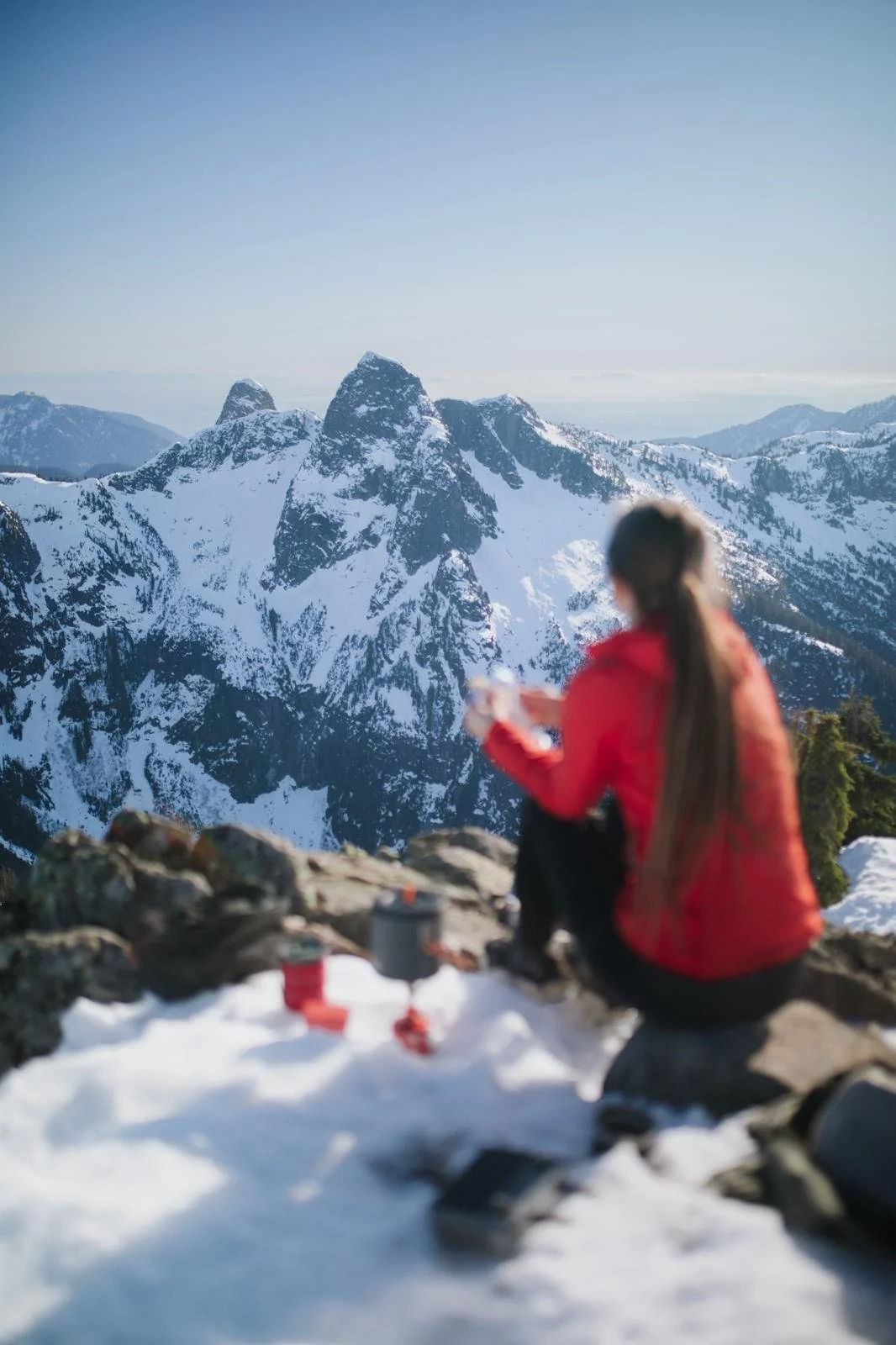
If you’re tackling Mount Harvey in snowy conditions, packing the right gear is essential. Depending on the conditions, that might include spikes or snowshoes, gaiters to keep snow out of your boots, warm gloves, a toque, a waterproof outer layer, and an extra insulating mid-layer for when you stop at the summit. Some hikers also carry an ice axe if the snow conditions warrant it, but this is not necessarily required. Knowing how to use an ice axe to self-arrest is also important, and something you may wish to look into more for these types of winter hikes. Conditions can change quickly on the mountains, so being prepared for a range of weather and snowpack situations is part of responsible winter hiking. (Sunscreen and sunglasses are other items you may wish to consider bringing if you’re going out on a sunny day).
There are a few key safety considerations worth highlighting before you head out. First, and probably most importantly, always check avalanche conditions both the evening before and the morning of your hike if you’re traveling in alpine or subalpine terrain. Snow stability can shift rapidly, even overnight. The saying “know your limit, play within it” absolutely applies here. If you don’t have the appropriate gear, training, or comfort level with avalanche terrain, this may not be the right objective for that day, and that’s okay. Waiting until conditions improve to hike the trail is the safe decision to make.
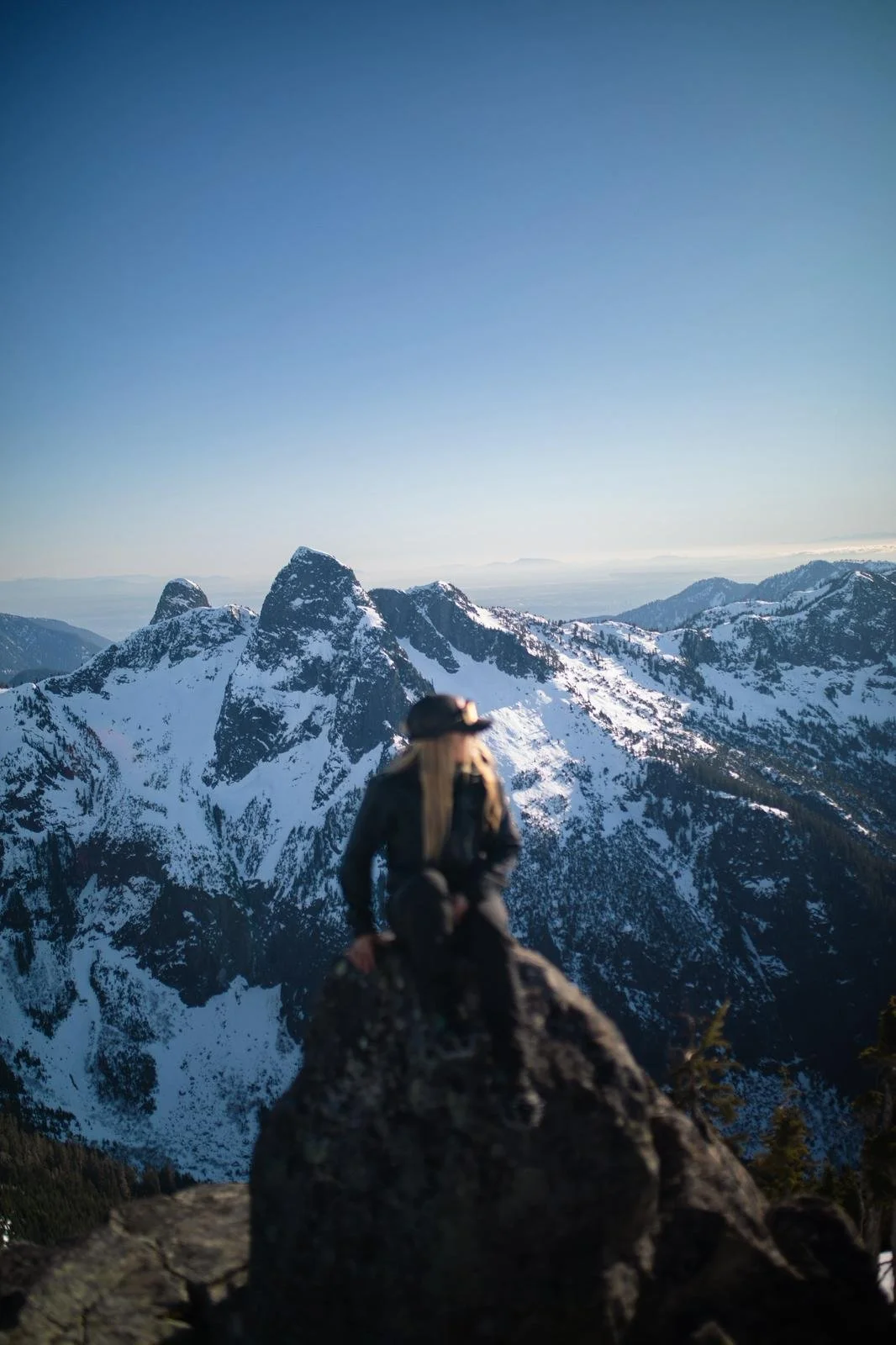
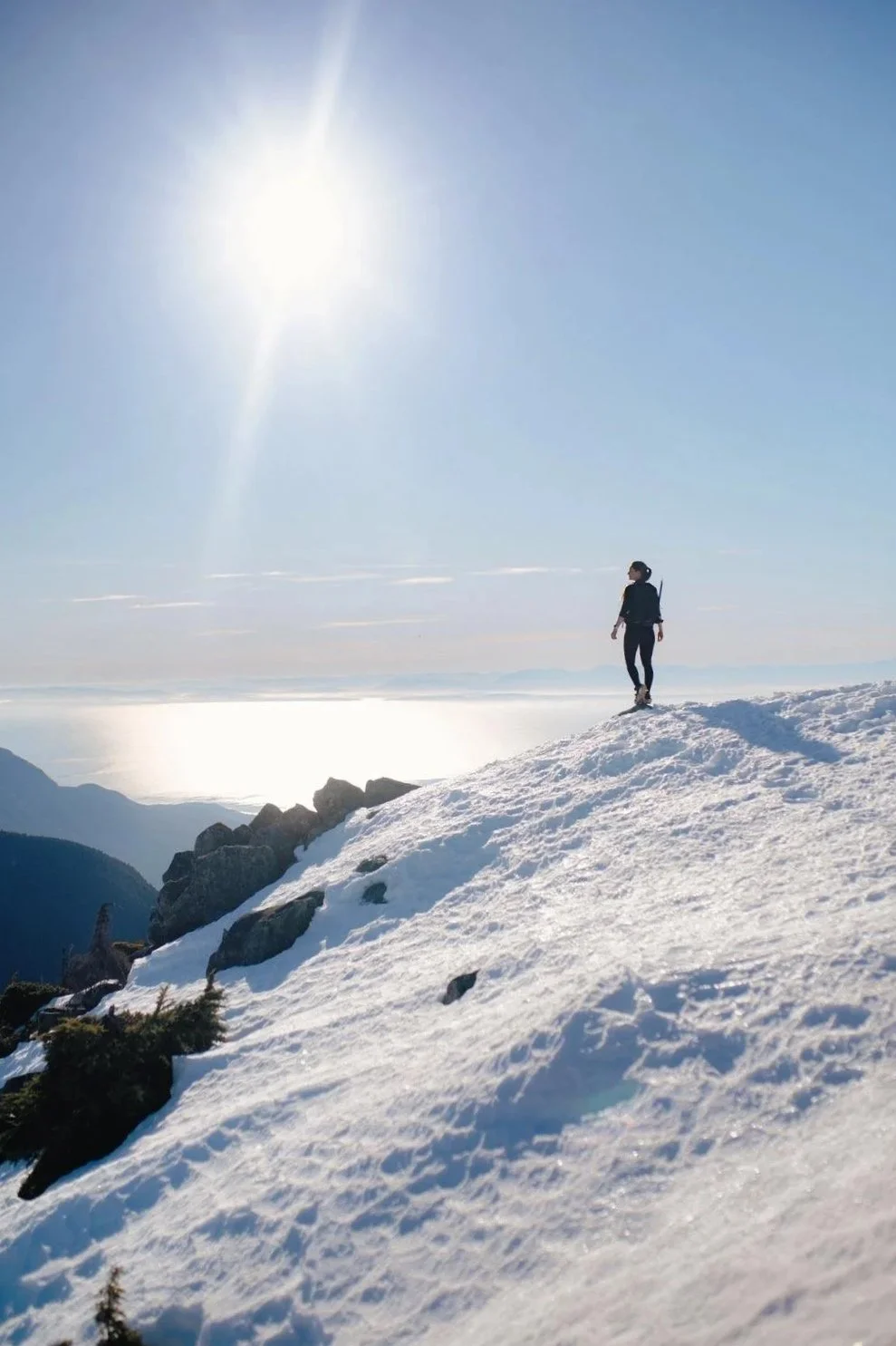
Weather is another major factor. Coastal mountain weather can change quickly at any time of year, but winter clouds can move in fast and dramatically reduce visibility. Not only can that create unsafe situations, but it can also mean putting in a lot of effort for a summit with no views. Checking a weather forecast platform you know is reliable and understanding what conditions are expected throughout the day can help you decide whether it’s going to be worth the trip, or waiting a couple days.
Cornices are another serious hazard along this route in the winter. These are overhanging formations of wind-deposited snow that can extend far beyond the actual edge of the ridge. It’s not always easy to tell where the solid ridge ends and where the unsupported snow begins, so staying away from the edge is the safest option. No photo or viewpoint is worth that risk. If you are unfamiliar with cornices, we encourage you to do a little more research on this subject before you head out.
Finally, as with any backcountry outing, always leave a trip plan with someone you trust. Let them know where you’re going, when you expect to return, and when they should follow up if they haven’t heard from you. It’s an important step on any hike that can make a huge difference if something doesn’t go as planned.
Mount Harvey is a challenging but incredible hike that offers some of the best views in the area. With thoughtful planning, the right gear, and knowledge about changing conditions, it can be the best hike of any season.